

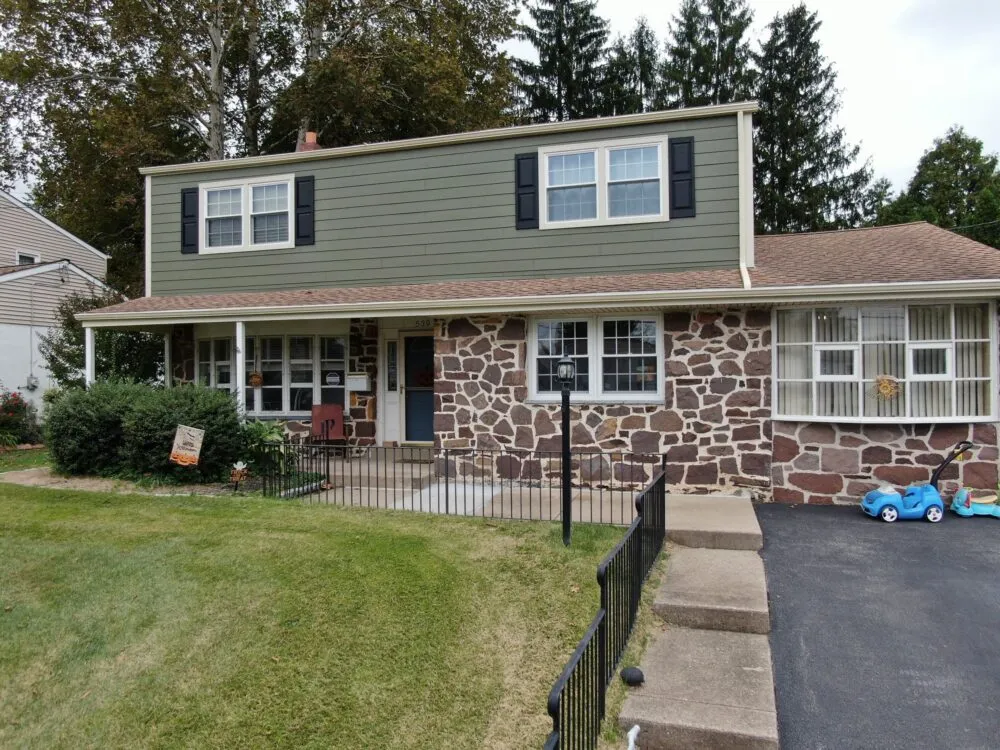

One of the reasons people choose vinyl siding is that it does not need painting or much upkeep. It does still get dirty, it can grow mildew on shady walls, and it can be damaged by the wrong cleaning method or by too much heat. A little care once a year keeps it looking right and helps you spot problems early.
This guide is based on published care guidance from the vinyl siding industry’s trade group and from siding manufacturers. One point to know up front: manufacturers do not all agree on pressure washing, so the instructions for your specific siding brand come first.
How often to clean vinyl siding
CertainTeed recommends cleaning its vinyl siding once a year to avoid build-up. Ply Gem points out that you should pay attention to areas under eaves, porches, awnings and other overhangs that rain cannot reach, since those spots do not get rinsed naturally.
The gentle method that works for most homes
The Polymeric Exterior Products Association (PEPA), the industry group whose site was formerly vinylsiding.org, says that for routine cleaning a simple rinse with a garden hose is often enough. For a deeper clean, the manufacturers and PEPA describe nearly the same approach:
- Use soft tools. PEPA recommends a soft cloth or a long-handled brush with soft bristles. Ply Gem suggests something like a long-handled car-washing brush.
- Use mild soap. CertainTeed says dish soap or common laundry detergent mixed with water works well, applied by hand and rinsed with clean water from a garden hose.
- Work from the bottom up. PEPA and Ply Gem both recommend starting at the bottom and working up to prevent streaking.
- Rinse before it dries. PEPA says to rinse the cleaning solution off completely before it has a chance to dry.
- Protect nearby surfaces. PEPA suggests covering brick or stone accents to protect them from runoff, and CertainTeed says to keep runoff off nearby fixtures and surfaces you are not washing.
- Test first. PEPA, CertainTeed and Ply Gem all recommend testing any cleaner on a hidden spot before using it on a large area.
Mildew and tougher stains
CertainTeed describes mildew as black spots on surface dirt, usually found in areas that rain does not reach. Options from the published guidance include:
- Small spots: PEPA suggests a commercial cleaner such as Fantastik or Windex.
- Larger areas: PEPA says a solution of 30% vinegar and 70% water is effective.
- Manufacturer-specific cleaners: CertainTeed suggests asking your siding contractor for a cleaner made for its siding for algae and stubborn stains, or using a house-wash product that attaches to a garden hose.
Some manufacturer recipes for heavy mildew do include a small amount of household bleach mixed with detergent and water. CertainTeed cautions that greater concentrations may damage vinyl siding, and PEPA lists undiluted chlorine bleach among products to avoid. If you use any bleach-based mix, follow your siding manufacturer’s recipe exactly and protect plants. CertainTeed suggests testing a small amount of solution on a plant first and waiting a few days to see if it is affected.
What to avoid when cleaning
PEPA lists products that can damage the surface of vinyl and polymer siding:
- Cleaners with organic solvents
- Undiluted chlorine bleach
- Liquid grease remover
- Nail polish remover
- Furniture polish
Ply Gem adds that you should not use abrasive cleaners or strong solvents, should not exceed recommended cleaner concentrations, and should scrub lightly, since excessive scrubbing can harm the finish.
Can you pressure wash vinyl siding?
This is where the guidance splits, so check your siding brand before you rent a pressure washer.
- CertainTeed says it does not recommend power washing vinyl or polymer siding because it can cause moisture intrusion, damage and discoloration. It also advises avoiding prolonged or high-pressure rinsing of open ventilated areas.
- PEPA says a power washer can be used, but with caution, and notes that some siding manufacturers do not recommend it. Its key rule: do not aim the stream upward, because that can force water behind the siding panels. It also says to be careful around windows, doors, electrical wiring and plumbing.
- Ply Gem says to hold the power washer straight at eye level and not aim it upward, since water can collect behind the siding and cause leaks, streaks and decay. For its siding, it specifies a 40-degree tip and a pressure between 1,500 and 2,400 PSI.
The common thread is clear: if pressure washing is allowed at all for your siding, keep the spray level, never point it up under the laps, and stay away from openings. When in doubt, the garden hose and soft brush method is the safe choice.
Keep heat sources away from the wall
Vinyl is a plastic, and PEPA notes that polymeric siding can melt or warp when exposed to significant heat. Its guidance:
- Keep barbecue grills and other heat sources a safe distance from the siding.
- Be aware of reflections from energy-efficient windows, which PEPA says can concentrate sunlight and create intense heat. Planting shrubs or installing window screens can help minimize the effect.
PEPA also warns that insecticides and herbicides can stain siding, so read product labels carefully before spraying near the house.
Should you paint vinyl siding?
PEPA says painting is often unnecessary because the color is designed to be long-lasting, that painting could void the product warranty, and that you should always check with your siding manufacturer before you consider it.
What to look for when you inspect
CertainTeed suggests scheduling exterior inspections twice a year, in spring and fall, and after major storms. When you look at the siding, CertainTeed says to check for cracks, warping or gaps, especially around windows and doors, to prevent moisture from getting in. A practical list:
- Cracked, broken or missing pieces, especially low on the wall where mowers and string trimmers reach
- Panels that are warped or wavy, which can be a sign of heat exposure
- Gaps or loose pieces around windows, doors and corners
- Black spots of mildew on shaded walls
- Gutters that overflow onto the siding. Our guide on when to replace gutters explains what to look for.
Small damage can often be fixed by replacing individual pieces. If you are weighing a different material altogether, our comparison of James Hardie vs. vinyl siding may help.
Frequently asked questions
What is the best way to clean vinyl siding?
A garden hose and a soft-bristle brush with mild soap and water. PEPA says a simple hose rinse is often enough for routine cleaning, and recommends working from the bottom up and rinsing before the solution dries.
Can I pressure wash my vinyl siding?
It depends on the manufacturer. CertainTeed does not recommend it. PEPA says it can be done with caution, and Ply Gem gives specific settings. Wherever it is allowed, keep the spray level and never aim it upward, since that can force water behind the panels.
Can I use bleach on vinyl siding?
Not undiluted. PEPA lists undiluted chlorine bleach as a product to avoid. Some manufacturers include a small, measured amount of bleach in mildew recipes, and CertainTeed warns that stronger concentrations can damage the siding. Follow your manufacturer’s recipe and test first.
Why is my vinyl siding warped near a window or grill?
PEPA notes that vinyl siding can melt or warp from significant heat, including grills placed too close and sunlight reflected from energy-efficient windows. Moving the heat source or adding shrubs or screens can help prevent it from happening again.
If you have cracked, warped or loose vinyl siding, we can tell you whether a repair will do or whether new vinyl siding makes more sense. Request a free estimate to get started. You can also read PEPA’s vinyl siding cleaning and maintenance guide.