



Metal roofing represents one of the most durable and versatile roofing systems available for both residential and commercial applications. Property owners choose metal roofs for their superior durability, energy efficiency, fire resistance, and low maintenance requirements.
Unlike asphalt shingles requiring replacement every 15-25 years, metal roofing residential systems last 40-70+ years with minimal upkeep. Steel roofing systems outperform conventional materials in wind resistance, hail protection, and energy savings through reflective coatings that reduce cooling costs by up to 25%.
Why Choose a Metal Roof?
Metal roofs suit homeowners seeking long-term value, minimal maintenance, and modern aesthetics. The material excels in extreme weather regions—coastal areas benefit from corrosion-resistant aluminum, while snow-prone zones appreciate metal’s smooth surface that sheds snow efficiently.
Metal roofs for homes and commercial buildings accommodate both low-slope and steep-slope applications. Commercial property owners needing durable roof systems choose metal for warehouses, retail centers, and office buildings where longevity maximizes return on investment. Fire resistance makes metal roofing essential in wildfire-prone areas with Class A ratings. Superior wind resistance protects against hurricane-force winds, while impact-resistant options withstand severe hail.
Types of Metal Roofing Panels
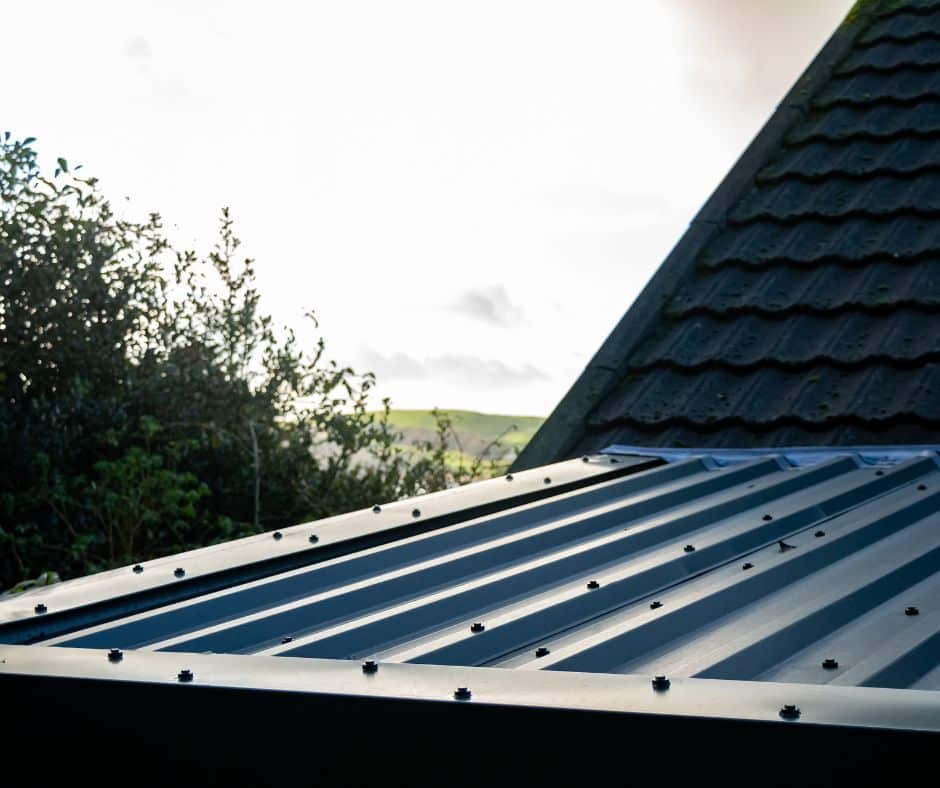
All metal roof systems fall into two main categories: exposed fastener and standing seam. Exposed fastener panels feature visible screws offering economical installation. Standing seam systems use concealed clips allowing thermal expansion, delivering premium performance and extended lifespans.
Exposed Fastener Metal Panels
Exposed fastener panels represent the most affordable metal roofing options with fast installation. Popular for commercial buildings, warehouses, agricultural structures, and budget-conscious residential applications.
Max-Rib — Tall, narrow ribs with excellent drainage.
Mesa — Wider rib spacing for commercial and residential use.
5V — Traditional crimp-style panel for agricultural buildings.
Multi-Cor & M-Cor — Corrugated profiles with good strength-to-weight ratios.
Multi-Rib — Multiple narrow ribs with enhanced structural performance.
R-Panel — Industry standard for commercial and residential applications.
U-Panel — Deep U-shaped ribs for larger spans.
Standing Seam Metal Roofing Panels
Standing seam represents premium types of metal roofing with concealed fasteners eliminating leak points, used in residential metal roof installations and high-end commercial projects.
Maxima — High-performance mechanical lock with superior wind uplift resistance.
Meridian — Snap-lock panel simplifying installation.
Medallion-Lok — Mechanical seam providing exceptional weather protection.
Instaloc — Fast-installing snap-together system.
138T & 238T — Symmetrical seam profiles for various architectural styles.
Medallion I / Medallion II — Traditional mechanical seam systems.
Metal Shingles & Metal Tiles
These systems replicate traditional roofing materials’ appearance while delivering metal’s durability, ideal for metal roofs for houses where owners desire traditional aesthetics.
Milan (steel shingles) — Stamped steel mimicking wood shake or slate.
Met-Tile (metal roof tiles) — Metal panels replicating clay or concrete tile profiles.
Stone-coated steel — Steel panels with stone granules providing authentic appearance.
Types of Metal Roofing Materials
Metal roofing materials vary in performance, lifespan, weight, and cost.
Steel (galvanized, galvalume) — Most common steel roofing materials offering excellent strength and affordability.
Aluminum — Lightweight corrosion-resistant option excelling in coastal environments.
Copper — Premium material developing distinctive patina, lasting over a century.
Zinc — Self-healing material with protective patina and exceptional longevity.
Tin (historical) — Historically used as coating, rarely used today.
Stone-coated steel — Steel with stone granule coating for traditional appearance.
Pros and Cons of Metal Roofing
Pros
Long Lifespan — Metal roofs eliminate multiple replacement cycles required for conventional materials.
Fire Resistance — Non-combustible materials provide Class A fire ratings for maximum protection.
Wind & Hail Resistance — Interlocking panels resist winds exceeding 140 mph with excellent hail protection.
Energy Efficiency — Reflective coatings reduce cooling costs by up to 25% in warm climates.
Sustainable / Recyclable — Materials contain recycled content and are 100% recyclable at end of life.
Low Maintenance — Minimal upkeep required beyond periodic inspections and cleaning.
Lightweight Options — Aluminum weighs significantly less than traditional materials, reducing structural requirements.
Cons
Higher Upfront Cost — Metal roofing costs $7-16 per square foot, substantially more than asphalt shingles.
Noise Without Insulation — Rain and hail create noise without proper underlayment and insulation.
Potential Denting — Aluminum and thinner steel panels dent from severe hail or falling branches.
More Difficult Installation — Requires specialized tools, training, and experience for proper installation.
Possible Oil Canning — Aesthetic waviness may appear in flat panel areas under certain lighting conditions.
Property owners throughout Berks County, Lehigh County, Bucks County, and Montgomery County trust Infinity Home Remodeling for expert guidance on types of metal roofing. Our team helps you select ideal metal roof materials and profiles with professional installation ensuring maximum performance. Contact us today for your consultation.