

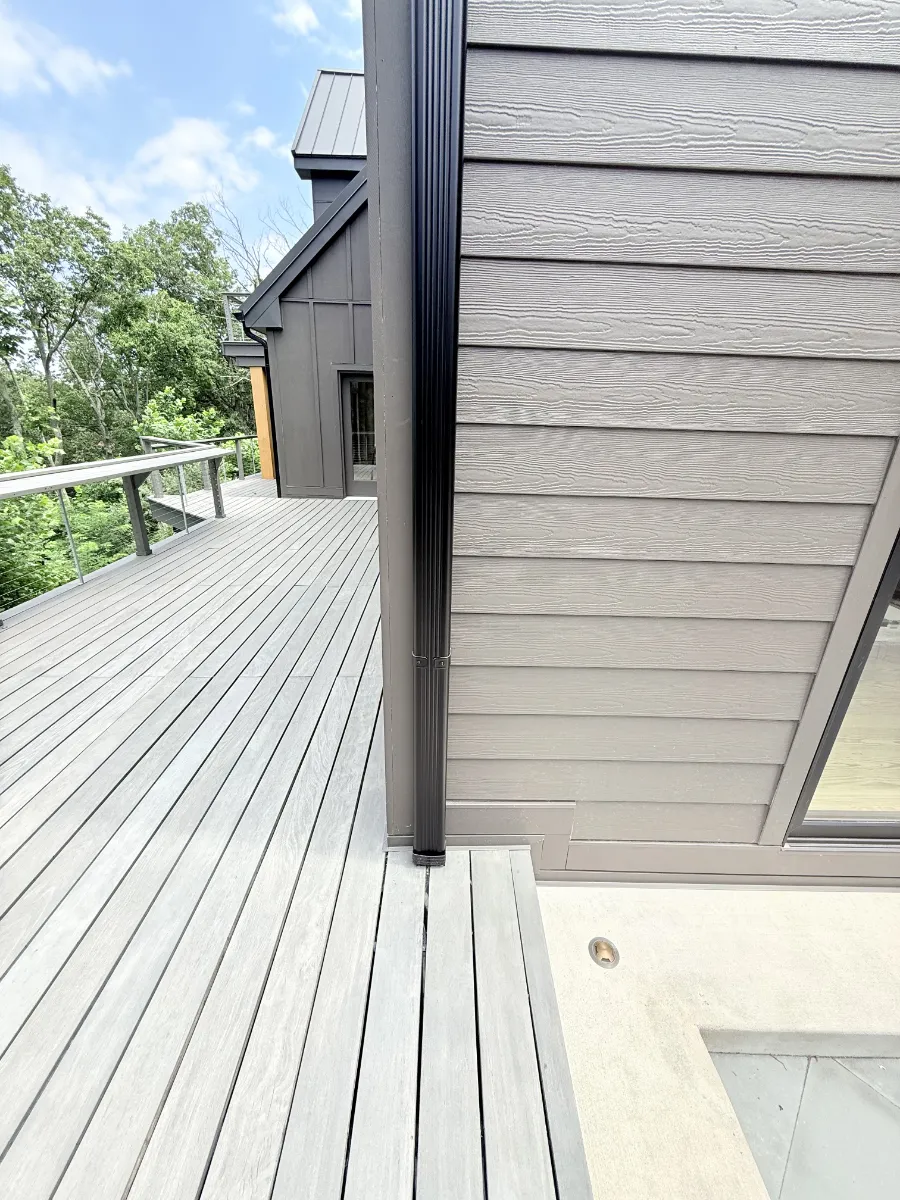

When you build a new deck or resurface an old one, the decking you walk on is the biggest choice you will make. It shapes how the deck looks, how it feels on a hot afternoon, and how much time you will spend on upkeep. The main options are pressure-treated lumber, naturally durable woods like cedar, wood-plastic composite, and fully synthetic PVC boards.
Below is a plain comparison, with each claim tied to a government researcher or to the manufacturer that makes the product. We have left out price and lifespan comparisons on purpose, because they vary so much by product line and we could not verify general figures.
One thing they all share: a wood frame
Before comparing surfaces, it helps to know that the decking choice usually does not change what holds the deck up. Trex, for example, lists pressure-treated lumber or steel as the recommended framing for its composite decking. So whichever boards you choose, the ledger, joists, beams, posts and footings still need to be sound. If you are resurfacing an existing deck, read our guide to deck repair vs. replacement first, because new boards will not fix problems in the structure underneath.
Pressure-treated wood
Pressure-treated lumber is a non-durable wood species that has been factory-treated with preservative chemicals forced deep into the wood under pressure. The USDA Forest Products Laboratory explains that this kind of treatment is what makes ordinary wood durable enough for outdoor and ground-contact use.
What to know:
- It still needs a finish. The Forest Products Laboratory notes that preservative treatment provides resistance to decay but not to mildew, and that a water-repellent preservative (WRP) finish adds mildew resistance and helps limit the cracking, checking and splitting that come with weathering.
- Finishing is ongoing. The Laboratory calls a WRP an effective finish for a fully exposed deck, but says the deck will need refinishing frequently. It describes annual refinishing as quick work with a brush, roller or pad, and puts the service life of these finishes at about a year on exposed surfaces.
- Hardware matters. The American Wood Council’s deck guide calls for fasteners and connectors used with treated wood to be hot-dipped galvanized, stainless steel, silicon bronze or copper.
- Older decks may use a different chemical. The EPA says manufacturers voluntarily stopped making wood treated with chromated arsenicals (CCA) for homeowner uses in December 2003. The EPA does not require removal of existing structures, and suggests a penetrating coating such as an oil- or water-based stain, applied regularly, may reduce leaching.
Cedar and other naturally durable woods
Cedar and redwood are popular for their color and natural look. According to the Forest Products Laboratory, their durability comes from natural extractives in the heartwood, the darker center of the log. Lumber with a lot of sapwood, the lighter outer wood, does not have that natural durability, and the Laboratory says WRP treatment is essential for above-ground decay resistance where sapwood is present.
Cedar weathers too. The Laboratory explains that unfinished wood exposed outdoors changes color, and that dark woods like cedar and redwood tend to lighten and can weather to silver-gray. Some homeowners like that look; others prefer to keep the original color with a penetrating finish. Either way, cedar needs the same kind of periodic finishing as treated wood if you want to slow weathering.
Composite decking
Composite boards blend plastic with wood particles. TimberTech describes its composite line as a blend of virgin and recycled polymers with organic material like wood flour, and says most of its composite collections have a four-sided protective cap that helps seal the board against moisture. Trex says its composite is made from 95% recycled materials.
What the manufacturers say about living with it:
- Cleaning, not refinishing. Trex says you will never have to sand, stain or paint its decking, and that routine care is soap and water. It also says Trex decking should never be sanded.
- Not scratch-proof. Trex states plainly that none of its products are scratch proof, though some lines are more scratch-resistant than others.
- Fading. Trex says its early-generation boards faded slightly as they weathered, and that its newer capped boards are designed to resist fading and staining.
- Warranties vary by line. Trex says it offers 25-, 35- and 50-year limited warranties for most products, depending on the line. Read the specific warranty for the board you choose.
The code also treats composite differently. The 2015 International Residential Code requires plastic composite deck boards, stair treads, guards and handrails to meet the ASTM D7032 standard and to be installed according to the manufacturer’s instructions. That means joist spacing, fasteners and gapping should follow the specific product’s installation guide.
PVC (fully synthetic) decking
PVC boards contain no wood at all. TimberTech says its Advanced PVC is made from recycled material with zero wood or organic fillers, resists moisture through the entire board, and does not depend on a cap for protection. TimberTech positions PVC as its highest level of protection against rot, mold and mildew.
Heat: every deck gets hot
This is the question we hear most about synthetic decking. TimberTech says all decking materials get hot in the sun, and that the darker the color, the hotter it will feel. Trex says the same about color. TimberTech adds that PVC boards can get hotter faster, but that composite boards get hotter overall given time.
TimberTech’s practical advice is worth following with any brand: get samples, leave them in the sun for at least two hours, and compare how they feel. Lighter colors reflect more sunlight. Shade from a pergola or awning helps too.
Side-by-side summary
- Pressure-treated: real wood look; needs regular water-repellent finishing per the Forest Products Laboratory; weathers and checks if neglected.
- Cedar: natural color and durability from the heartwood; weathers to gray unless finished; needs periodic finishing.
- Composite: wood-plastic blend, usually capped; cleaned rather than refinished per the manufacturers; not scratch-proof; darker colors get hot.
- PVC: no wood content; manufacturer-claimed top moisture and mold resistance; heats faster but, per TimberTech, less overall than composite.
How to decide
- How much upkeep will you really do? If yearly finishing sounds unrealistic, a capped composite or PVC board avoids it.
- How much sun does the deck get? On a south- or west-facing deck with no shade, test sample colors in the sun first.
- What look do you want? Look at full-size boards in daylight, not just photos or small chips.
- Is the frame sound? Whatever goes on top, the structure underneath is what keeps the deck safe.
See examples of decks we have built on our our work page, or learn more about our deck building and resurfacing.
Frequently asked questions
Does composite decking get hotter than wood?
All decking gets hot in direct sun, and darker colors get hotter, according to both Trex and TimberTech. TimberTech says PVC heats faster but composite gets hotter overall over time. Testing samples in the sun is the best way to compare.
Do I have to stain a pressure-treated deck?
The USDA Forest Products Laboratory says preservative treatment protects against decay but not mildew, and recommends a water-repellent preservative finish for exposed decks, reapplied frequently, often yearly.
Can composite boards go on my existing frame?
Sometimes, if the frame is sound and meets the board manufacturer’s installation requirements, such as joist spacing. The 2015 IRC requires composite decking to be installed according to the manufacturer’s instructions.
What is the difference between composite and PVC decking?
Composite blends plastic with wood particles and usually has a protective cap. PVC contains no wood. TimberTech says its PVC resists moisture through the whole board and does not rely on a cap.
If you are deciding between wood and composite for a new deck or a resurfacing project, we can bring samples, check your existing frame, and talk through the trade-offs for your yard. Request a free estimate to get started. For more on wood finishes, see the Forest Products Laboratory report on water repellents for wood.