


A patio door gets used more than almost any other door in the house. It lets in light, connects the kitchen or family room to the deck or patio, and on a nice day it may stay open for hours. When it is time to replace one, the first big decision is the style: a sliding door, a hinged French-style door, or one of the larger folding and multi-panel systems.
Each style works differently, and the right one depends mostly on your room, your deck or patio, and how you use the opening. This guide walks through the practical differences, using what the manufacturers and energy agencies themselves say.
The three basic styles
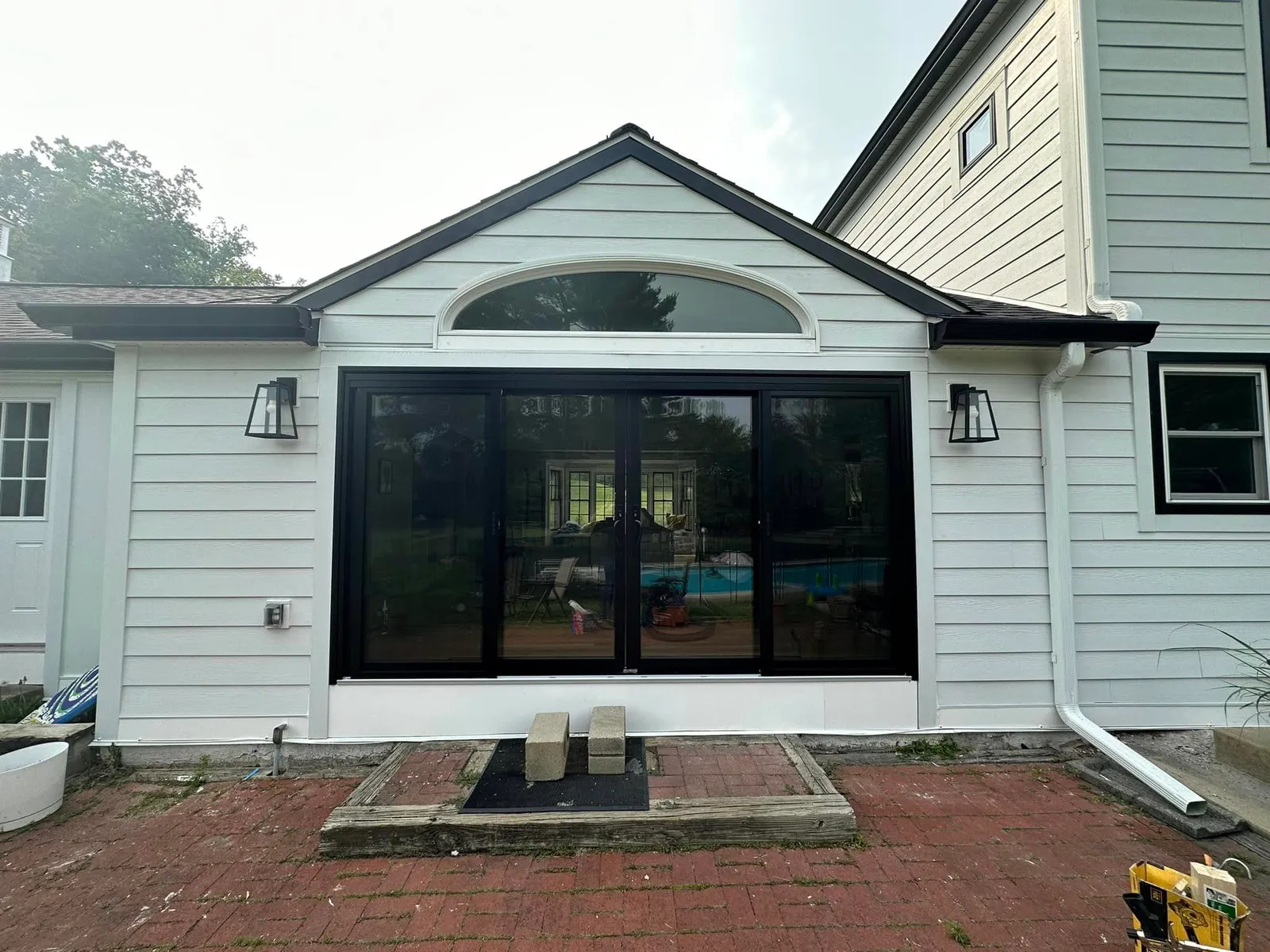
Sliding (gliding) patio doors
Andersen describes sliding, or gliding, patio doors as having two or more panels that slide parallel to the wall. They can have two, three or four panels. Because they open flush with the wall, nothing swings into the room or out onto the deck. The trade-off Andersen points out is that some panels are fixed, so the width you can actually walk or air through is less than with other patio door types.
Hinged (French-style) patio doors
Hinged patio doors have panels that swing on hinges. Andersen notes that hinged doors that open inward are called inswing and those that open outward are called outswing, and that the direction is chosen when the door is ordered. Two-panel units are standard, with one- and three-panel versions also available. When both panels of a double door open, the result is a wide opening.
Folding and multi-slide “wall” systems
For very large openings, manufacturers offer systems that fold or stack so most of a wall can open. Andersen’s own lineup includes a folding outswing door whose hinged panels accordion open, sliding systems whose panels can pocket into the wall, and a lift-and-slide system with fewer, larger panels. Andersen also says its all-aluminum Multi-Slide door is designed for warmer climates and is available only in select locations, which is a reminder to ask whether a given product is suited to a southeastern Pennsylvania home before falling in love with it.
Space: where will the door go when it opens?
This is usually the deciding factor.
- Sliding doors need no swing room. Andersen points out that a sliding door saves space by opening flush with the wall, which makes it a natural fit for tight rooms, small patios and balconies.
- Hinged doors need clear space for the panels to swing. Andersen cautions that they may not suit rooms with a lot of furniture or other obstructions near the door.
Inswing or outswing?
If you want a hinged door, think about which side has room to spare. Andersen’s guidance is practical: on a balcony or small deck, an inswing door avoids taking space away from your outdoor living area. An outswing door may make more sense in a busy room such as a kitchen, or where an inward-opening door would block a hallway. Note that outswing is not offered in every product line. Andersen, for example, offers outswing hinged doors only in some of its series.
Before choosing, measure the swing. Picture where the table, chairs, grill and railings will be, both inside and out.
Ventilation and light
Because one panel of a standard sliding door is usually fixed, it opens only part of the frame. A double hinged door with both panels operable opens much wider. Andersen says the double opening of a hinged door lets in lots of fresh air and makes moving between indoors and out easier. If you entertain often or carry furniture and trays in and out, that wider opening matters.
On the other hand, Andersen notes that hinged doors have wider frames, particularly the bottom rail, so a sliding door of the same size can show a bit more glass.
Security and hardware
Both styles can be secured well, but the hardware differs:
- Sliding doors: Andersen offers an auxiliary foot lock that sits in the track and holds the moving panel in place, whether the door is closed or partly open, as well as exterior keyed locks in addition to the interior thumb lock.
- Hinged doors: Because both panels of a French door move, Andersen says these doors need more substantial hardware, such as multi-point locks and adjustable hinges that help keep the panels from sagging.
Whatever style you choose, ask what locking hardware is included and what is an upgrade.
Weather sealing and energy
Patio doors are mostly glass, and that affects comfort and energy use. A State of Illinois energy guide, based on U.S. Department of Energy consumer material, makes three useful points:
- Glass patio doors, especially sliding glass doors, lose heat much faster than other types of doors because glass is a poor insulator. Multiple layers of glass and low-e coatings improve that considerably.
- Because a sliding door has to slide, its weatherstripping cannot stop all air leakage, and the weatherstripping wears as the door ages. Where the manufacturer makes it possible, worn sliding-door weatherstripping can be replaced.
- When replacing patio doors, swinging doors offer a much tighter seal than sliding types.
That does not mean a sliding door is a poor choice. It means the seal and glass package are worth comparing carefully, and that a hinged door has a natural advantage on air sealing.
Look for NFRC ratings and ENERGY STAR
ENERGY STAR certifies doors, including glass patio doors, not just windows. According to ENERGY STAR, door criteria are based on how much glass the door has and on ratings certified by the National Fenestration Rating Council (NFRC). ENERGY STAR also notes that even doors with lots of glass, like a sliding patio door, have lower glass-to-frame ratios than windows.
The NFRC label lets you compare products. NFRC’s consumer guide explains that a lower U-factor means less heat escapes, solar heat gain coefficient (SHGC) measures how much solar heat comes in, a higher visible transmittance means more daylight, and the optional air leakage rating is better when lower. When comparing a sliding door and a hinged door, look at the U-factor and, if listed, the air leakage number side by side.
Style
Andersen’s general rule of thumb is that sliding doors suit modern homes well and hinged doors suit traditional homes, though it adds that designers can make a case for either style in any home. If your house has traditional trim and divided-lite windows, a French door often matches. If you prefer clean lines and maximum glass, a slider may look more at home.
Quick comparison
- Tight room or small deck: sliding, or an inswing/outswing hinged door that opens toward the side with space.
- Widest everyday opening: a double hinged door with both panels operable, or a folding/multi-slide system for very large openings.
- Tightest air seal: hinged (swinging) doors, per the DOE-based guidance above.
- Traditional look: hinged French-style. Modern look: sliding.
If you are also replacing nearby windows, it helps to match the frame material and finish. Our windows and doors page covers both, and our guide to signs your windows need replacement may help you decide whether to do them together.
Frequently asked questions
Do hinged patio doors seal better than sliding doors?
Generally, yes. DOE-based guidance published by the State of Illinois says swinging doors offer a much tighter seal than sliding types, because a sliding door’s weatherstripping cannot stop all air leakage while still letting the door slide.
Should a French door swing in or out?
It depends on where you have room. Andersen suggests an inswing door for a balcony or small deck so it does not take outdoor space, and an outswing door where an inward swing would crowd a busy room or block a hallway. Not every product line offers outswing.
Do patio doors qualify for ENERGY STAR?
Yes. ENERGY STAR certifies doors, including glass patio doors. Its criteria are based on the amount of glass in the door and NFRC-certified ratings, so check the NFRC label and ENERGY STAR status for the specific model.
Which patio door opens the widest?
A standard sliding door opens only part of its width because some panels are fixed. A double hinged door with both panels operable opens wider, and folding or multi-slide systems can open most of a wall.
If you are weighing a new slider against a French door, we can measure the opening, talk through the swing and space on both sides, and show you options. Learn more about our patio door replacement, or request a free estimate. For background on the ratings, see the NFRC consumer guide to energy ratings.