

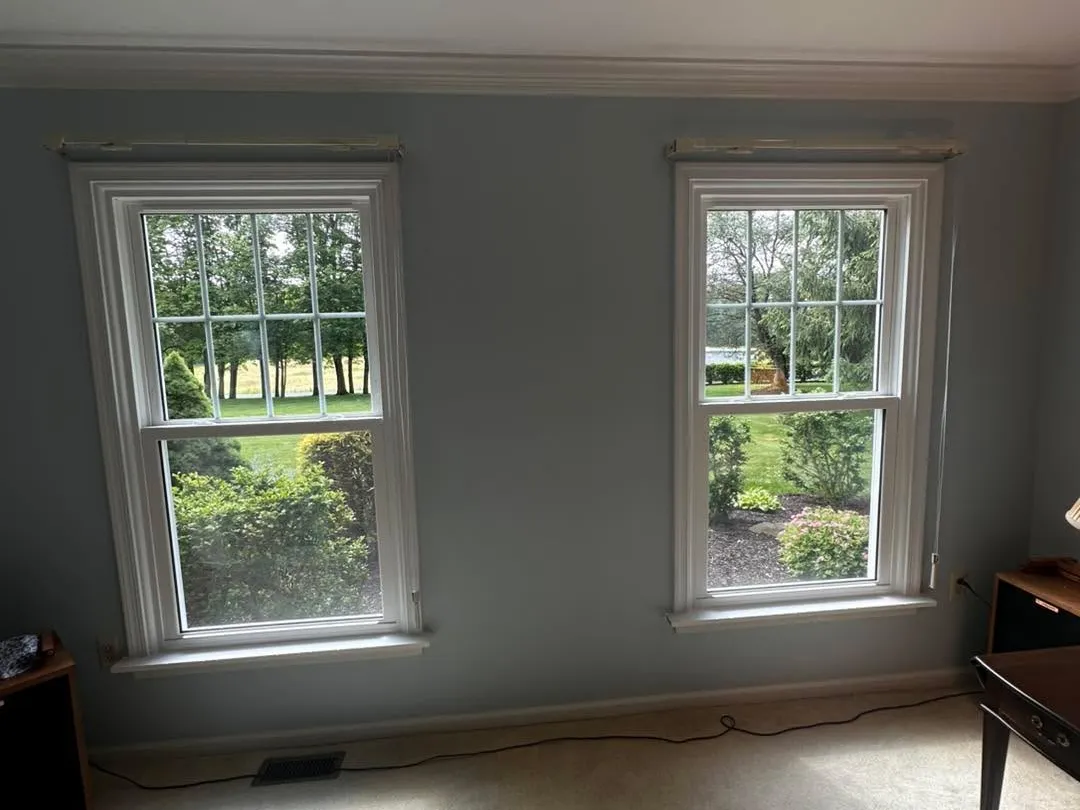

Windows rarely fail all at once. More often, they give small warnings over several seasons: a draft you notice every January, a pane that always looks foggy, a sash that takes two hands to lift. Some of these problems can be repaired. Others mean the window has reached the end of its useful life.
This guide walks through the most common signs, explains what is actually happening inside the window, and helps you sort out which issues call for a repair and which point toward replacement.
1. Fog or condensation between the panes
Most modern windows use an insulating glass unit: two (or three) panes of glass sealed together around the edges, often with an insulating gas such as argon in the space between them. When that edge seal fails, moist outdoor air can get into the space between the panes.
The NFRC consumer guide explains that seal failure leads to the loss of the insulating gas and can result in condensation from moisture getting between the panes, which can also degrade the low-E coating on the glass. That is why you may see a milky haze, streaks or water droplets that you cannot wipe away from either side.
What it means: A failed seal cannot be fixed by cleaning. Depending on the window, the glass unit itself may be replaceable, or the whole window may need to go. Before you decide, check whether the window is still under the manufacturer’s warranty. Many manufacturers warrant their insulating glass against seal failure for a set number of years, and the terms vary from brand to brand, so read the actual warranty document for your windows.
Condensation on the inside surface is different
Water beading on the room side of the glass in cold weather is usually a humidity issue, not a broken window. ENERGY STAR notes that certified windows are more resistant to condensation, but even they can suffer from it in cold weather. Window manufacturers say the same thing in their warranties: condensation on the glass is generally treated as a result of indoor humidity, not a product defect. ProVia’s window warranty, for example, suggests reducing indoor humidity with a dehumidifier or a kitchen exhaust fan and keeping relative humidity at moderate levels.
2. Windows that are hard to open, close or lock
A window that sticks, will not stay open, or has to be forced to lock is more than an annoyance. A window that does not close tightly also lets air in around the sash.
Common causes include:
- Worn balances in double-hung windows (the parts that hold the sash up when you raise it)
- Swollen or warped wood in older wood frames
- Layers of paint that have sealed the sash to the frame
- Broken or worn locks, cranks and hinges on casement and awning windows
- A frame that is no longer square because the house has settled or the frame has been damaged
What it means: Hardware and balances can often be repaired or replaced on their own. If the frame itself is warped, rotted or out of square, or if parts are no longer available for an older window, replacement is usually the more practical answer.
3. Soft spots, rot or water damage
Wood is a beautiful window material, but the NFRC consumer guide points out that wood is naturally susceptible to rot, which is why many newer wood windows use protective finishes or exterior cladding. On older wood windows, look for:
- Soft or spongy wood when you press on the sill or the bottom of the sash
- Peeling paint that keeps coming back in the same spot
- Dark staining, mold or mildew around the frame
- Water stains on the interior wall or drywall below the window
What it means: Small, surface-level damage can sometimes be repaired. Widespread rot, or water getting into the wall around the window, is a bigger concern, because the problem may extend beyond the window into the framing of the house. In that case it is worth having the opening inspected when the window is removed.
4. Drafts and cold spots near the window
If you can feel cold air near a closed window, or a room never seems as comfortable as the rest of the house, the windows may be part of the reason. The U.S. Department of Energy’s Home Energy Checklist states that the typical home loses more than 25% of its heat through windows.
The same checklist gives two paths for leaky windows: it may be time to replace them with energy-efficient models, or you can boost their efficiency with weatherstripping and storm windows. That is a fair way to think about it. Fresh caulk and weatherstripping are inexpensive first steps. If the window still leaks after that, or the sash and frame are in poor shape, replacement becomes the stronger option.
5. Rising heating and cooling bills
Old windows, especially single-pane windows, can make your heating and cooling system work harder. According to ENERGY STAR, replacing single-pane windows with ENERGY STAR certified windows lowers household energy bills by an average of up to 13 percent nationwide. Your own results depend on your home, your current windows and your climate.
A few points worth knowing from energystar.gov:
- Every ENERGY STAR window is independently certified to meet EPA’s efficiency guidelines.
- Products are certified by climate zone, so look for the ENERGY STAR label for your zone next to the NFRC label on the glass.
- ENERGY STAR says the low-E coatings used on efficient windows reduce fading of furniture and floors by up to 75 percent.
You can read more on the ENERGY STAR windows, doors and skylights page.
6. Outside noise that seems louder than it should
If traffic, lawn equipment or neighbors sound like they are inside the room, gaps around the sash and thin single-pane glass may be letting sound through. Noise alone is rarely the only reason to replace windows, but it often shows up alongside drafts and worn seals.
If quiet is a priority, ask about glass designed for sound control. Some manufacturers offer specific glazing for sound abatement, rated by STC and OITC values. For example, Marvin lists sound abatement glazing as an option on its Essential double-hung window. How much quieter a room becomes depends on the glass, the frame and how well the window is installed and sealed.
Repair or replace? A quick comparison
| What you notice | Often repairable | Often points to replacement |
|---|---|---|
| Fog between panes | Glass unit swap on some windows; check warranty | Several failed units, or an older window with other problems |
| Hard to open or lock | New balances, locks or cranks | Warped or out-of-square frame; parts unavailable |
| Rot | Small, surface-level spots | Soft sills, rotted sash, water in the wall |
| Drafts | Caulk, weatherstripping, storm windows | Leaks that continue after sealing |
| Condensation on the room side | Lower indoor humidity | Rarely a reason by itself |
A note for older homes
ENERGY STAR points out that if your house was built before 1978, it probably contains lead-based paint, and contractors replacing windows must use lead-safe work practices under EPA rules. If you own an older home, ask any contractor how they handle this before work begins.
What to look for in replacement windows
If you decide to replace, focus on a few basics: the frame material (vinyl, fiberglass, wood or a combination), the glass package, ENERGY STAR certification for your climate zone, and the manufacturer’s written warranty. Installation matters just as much as the product, because a well-made window installed poorly can still leak.
At Infinity Home Remodeling, we offer windows from Andersen, Marvin and ProVia. You can compare those lines on our windows and doors page or learn how a project works on our window installation page.
Frequently asked questions
Can I just replace the foggy glass instead of the whole window?
Sometimes. On many windows the insulating glass unit can be replaced by itself. Whether that makes sense depends on the age and condition of the frame and sash, and on whether the glass is still covered by the manufacturer’s warranty.
Is condensation on my windows a sign they are failing?
It depends on where it is. Moisture between the panes points to a failed seal. Moisture on the room-side surface in cold weather is usually caused by indoor humidity; ENERGY STAR notes that even certified windows can have it in cold weather.
How much will new windows lower my energy bills?
ENERGY STAR states that replacing single-pane windows with ENERGY STAR certified windows lowers household energy bills by an average of up to 13 percent nationwide. Actual results vary by home, climate and the windows being replaced.
Should I try weatherstripping before replacing?
For drafty windows that are otherwise in good shape, yes. The U.S. Department of Energy suggests weatherstripping and storm windows as a way to boost the efficiency of existing windows. If the frame is rotted, warped or the glass seals have failed, sealing alone will not solve the problem.
Not sure what your windows need?
If you are seeing one or more of these signs, we can take a look, measure, and talk through repair and replacement options with you. We serve homeowners throughout our service area in Bucks, Montgomery, Berks and Lehigh counties. When you are ready, request a free estimate.