

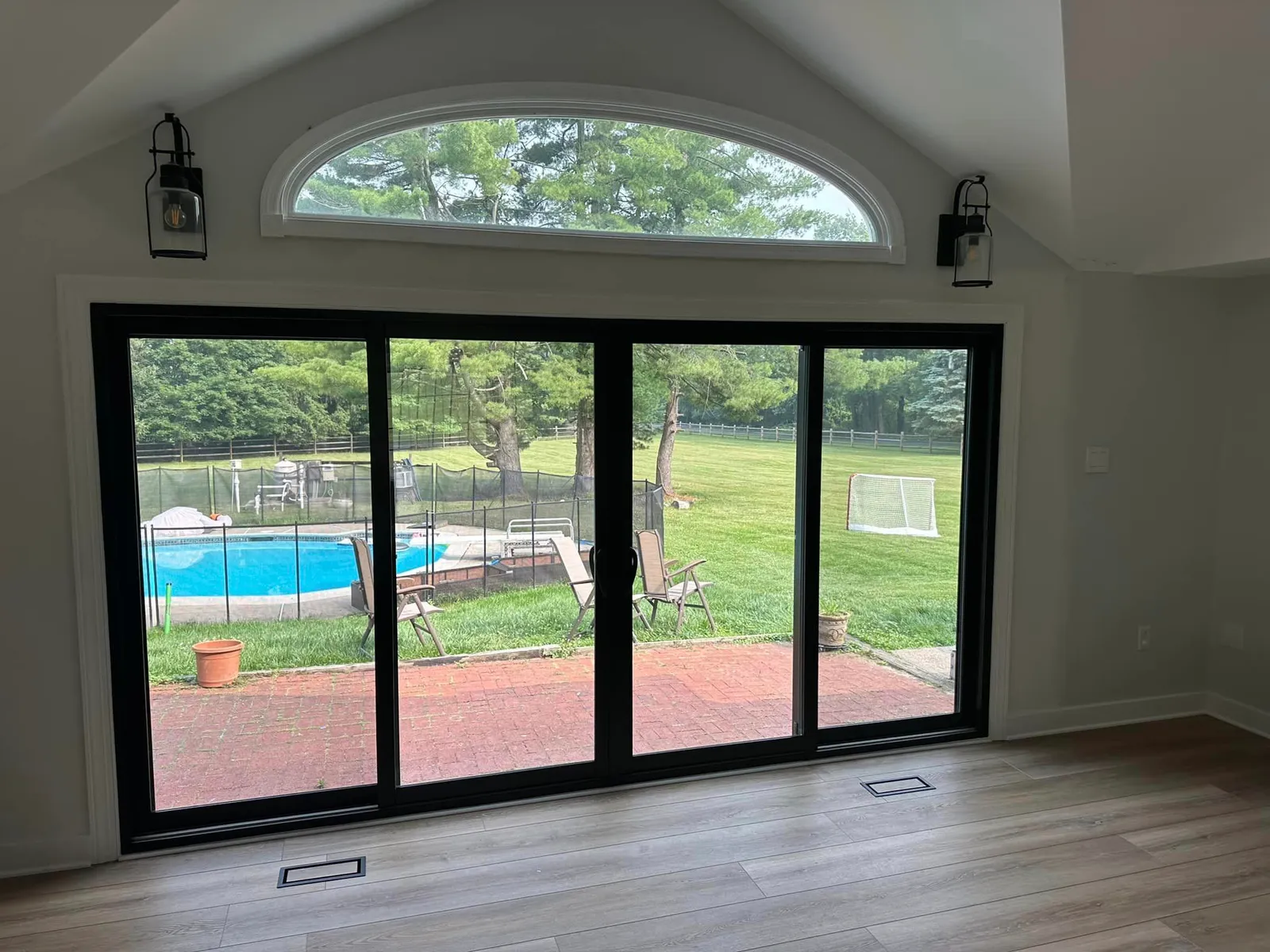

When you replace windows, it is easy to order the same style you already have. Sometimes that is the right call. But each window style opens differently, lets in air differently, and fits some rooms better than others. Knowing the trade-offs helps you decide where to keep the same style and where a change might work better.
This guide compares the most common residential styles: double-hung, single-hung, casement, awning, sliding, picture, and bay and bow windows. Descriptions are based on manufacturer guidance from Andersen and on a U.S. Department of Energy retrofit guide.
Double-hung windows
How they open: Two sashes stacked vertically, and both slide. Andersen notes a double-hung window can be opened from the top, the bottom or both at once.
- Pros: A traditional look that suits most homes. Opening the top and bottom together helps air move, which Andersen says is useful in a room with only one window. Many have tilt-wash hardware so you can clean the outside glass from inside.
- Cons: Andersen points out that with more parts and pieces, a double-hung can be more complex to maintain over time.
- Good fit: Almost any room, and especially traditional-style homes.
Single-hung windows
How they open: They look like a double-hung, but only the bottom sash moves. The top sash is fixed.
- Pros: Andersen says the fixed top sash makes a single-hung more energy efficient than a double-hung and less expensive, since fewer moving parts mean fewer places for air to leak.
- Cons: Less fresh air than a double-hung, because only the bottom opens.
- Good fit: Spots where the top sash would be too high to reach anyway, or where you want the double-hung look at a lower price.
Casement windows
How they open: A single sash, hinged on the side, that cranks open outward like a door.
- Pros: Andersen calls the casement its most energy-efficient operable window. The whole sash opens from top to bottom, which helps maximize fresh air. The crank also makes casements a practical choice over a kitchen sink or anywhere a window is hard to reach.
- Cons: Because they swing outward, Andersen says casements can take space away from patios, decks and walkways.
- Good fit: Over sinks and counters, contemporary designs, and walls where you want maximum ventilation.
Awning windows
How they open: Hinged at the top, they crank outward from the bottom.
- Pros: Andersen says awning windows let in light and fresh air while preserving privacy, and work well when you want an operable window high on a wall. They can provide ventilation even on rainy days, which is one reason they are popular in bathrooms.
- Cons: Like casements, they open outward and can get in the way of outdoor paths and living space.
- Good fit: Bathrooms, above other windows or doors, and paired with picture windows.
Sliding (gliding) windows
How they open: Two or three horizontal sashes that slide side to side.
- Pros: Because they open flush with the wall, Andersen says sliding windows are ideal next to walkways, porches and decks.
- Cons: Andersen notes you cannot change which way a sliding window opens after ordering, so plan which side should open.
- Good fit: Wide, short openings, and walls next to outdoor living spaces.
Picture windows
How they work: They do not open at all.
- Pros: Andersen calls the picture window the most energy-efficient window because it does not open, and says it can be very large for the same reason.
- Cons: No ventilation. Many homes pair a picture window with operable windows on the sides or below.
- Good fit: Living rooms, dining rooms, stairwells and anywhere with a view.
Bay and bow windows
How they work: Several windows joined together so they project out from the wall. According to Andersen, a bay window combines three or more windows, usually a center picture window with flanking windows set at 30, 45 or 90 degrees. A bow window uses at least four casement windows set at shallow angles to form a gentle curve.
- Pros: Andersen says the extra glass at different angles brings in more light, and the projecting design creates more space inside. The center picture window gives a wide view while the side casements or double-hungs let in air.
- Cons: Andersen notes bay and bow windows are more complex and require more people to install, which can lead to higher costs. They are supported by brackets underneath and benefit from extra insulation at the top and bottom. Andersen also says condensation can form more easily in a bay because it angles out beyond the house.
- Good fit: Living rooms and bedrooms with a view, or anywhere you want a seating nook.
Ventilation and air leakage: how the styles differ
How a window seals affects drafts. A U.S. Department of Energy retrofit guide prepared by Oak Ridge National Laboratory explains that windows that compress a gasket when they close, rather than relying on a sliding seal, typically let less air leak in and out. It suggests considering casement or awning windows even if your existing windows are double- or single-hung. Andersen makes a similar point, describing casement and awning windows as top performers because of their single-sash design and seals.
That does not mean double-hung windows are a poor choice. Ratings vary by product, so compare the air leakage figure on the NFRC label for the specific windows you are considering.
Safety glass and emergency exits
Window style also matters for safety. The DOE retrofit guide notes that building codes change over time, that safety glass may be required in a new window even if the old one had standard glass, and that egress requirements are especially important because they make sure occupants can get out and firefighters can get in during an emergency. Andersen notes that casement and sliding windows work well for egress because their size can meet code requirements.
If you are replacing windows in a bedroom or finished basement, ask your installer to confirm that the new window meets the egress rules in your local building code. Changing styles, for example from a double-hung to a smaller sliding window, can change how large the clear opening is.
Choosing styles room by room
- Kitchen over the sink: Casement or awning, since a crank is easier to reach than a sash you have to lift.
- Next to a deck, porch or walkway: Sliding or double-hung, which do not swing out into the space.
- Bathroom: Awning, for ventilation high on the wall with more privacy.
- Living room with a view: Picture window, or a bay or bow if you want more light and space.
- Bedrooms: Whatever style meets the egress rules and suits the room.
If your current windows are drafty, foggy or hard to operate, our guide to signs your windows need replacement can help you decide whether it is time.
Frequently asked questions
Which window style is the most energy efficient?
Andersen says picture windows are the most energy efficient because they do not open, and casements are its most energy-efficient operable window. A DOE guide notes that windows that seal with a compressed gasket, like casements and awnings, typically leak less air than sliding-seal windows.
What is the difference between single-hung and double-hung windows?
Both have two stacked sashes. On a double-hung, both sashes move. On a single-hung, only the bottom one does. Andersen says single-hung windows are less expensive and more energy efficient but provide less fresh air.
Can I change window styles when I replace my windows?
Often, yes. The DOE retrofit guide suggests considering casement or awning windows even if you have double- or single-hung windows now. Check that any change still meets egress rules in bedrooms.
What is the difference between a bay and a bow window?
Andersen describes a bay as three or more windows with flanking units set at angles to a center window. A bow uses at least four casement windows arranged in a gentle curve.
We install window lines from Andersen, Marvin and ProVia. See our windows and doors page, or request a free estimate and we can talk through the right style for each room. You can also read Andersen’s guide to different window styles.