

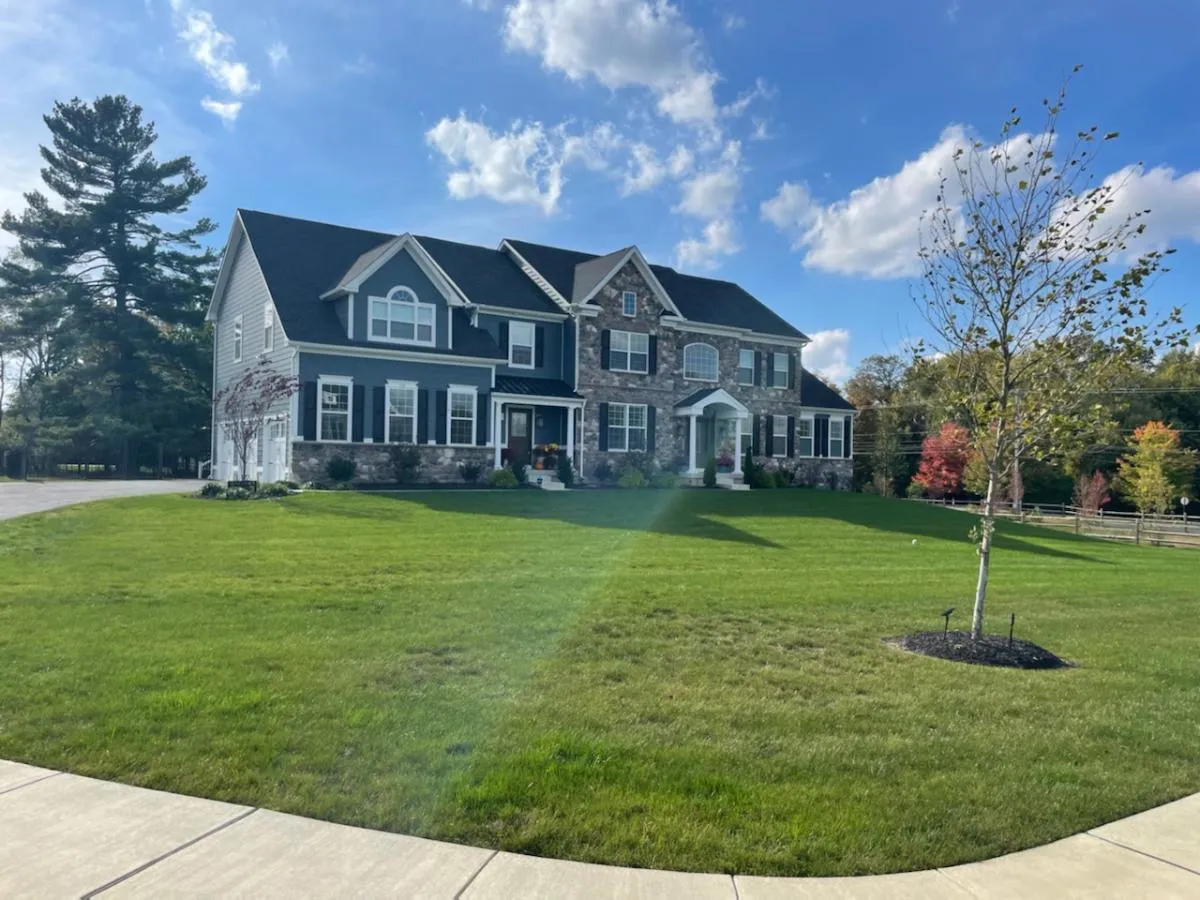

If you are planning new siding, the choice usually comes down to two materials: James Hardie fiber cement or vinyl. Both are common on homes across Bucks, Montgomery, Berks and Lehigh counties, and both can look great for years when they are installed correctly. They are also very different products, and the right one depends on your house, your budget and how you feel about upkeep.
This guide sticks to what the manufacturers and the vinyl industry actually publish, so you can compare them honestly. We install both, so we have no reason to push you toward one.
The short version
| Topic | James Hardie fiber cement | Vinyl siding |
|---|---|---|
| What it is | Fiber cement boards, planks, shingles and panels | Rigid PVC panels made to an industry standard (ASTM D3679) |
| Fire | Noncombustible; complies with ASTM E136 as a noncombustible cladding (the paint or coating is not covered by that rating) | Can melt or warp near significant heat, such as a grill set too close |
| Climate design | HardieZone system; HZ5 products are made for cold climates with freezing temperatures, snow and ice | Must be installed loosely so panels can expand and contract with temperature |
| Finish | Factory ColorPlus finish, or primed boards painted on site | Color is part of the panel; painting is often unnecessary |
| Upkeep | Periodic inspection and cleaning; a painted finish will eventually need repainting | Periodic cleaning with mild soap and water |
| Warranty | 30-year non-prorated, transferable limited substrate warranty; 15-year prorated limited ColorPlus finish warranty covering paint and labor | Varies by manufacturer and product line; read the specific warranty |
James Hardie fiber cement: what the manufacturer says
Fire resistance
James Hardie states that its siding is noncombustible and complies with ASTM E136 as a noncombustible cladding. It also notes an important limit: the fire resistance of fiber cement does not extend to paints or coatings applied to it. In plain terms, the board itself will not burn, but the finish on it can still be damaged by flame.
Built for the local climate
Hardie sells its siding under what it calls the Hardie Zone System, with products “Engineered for Climate.” The HZ5 line is designed for cold climates with freezing temperatures, big seasonal temperature swings, snow and ice. The HZ10 line is aimed at hot, humid, coastal and storm-prone areas. James Hardie offers a zip code lookup on its site to confirm which product fits a given location, and southeastern Pennsylvania winters are the kind of conditions HZ5 is described for.
ColorPlus finish
ColorPlus is Hardie’s factory-applied finish. According to James Hardie, the boards are heated, coated, and cured between coats in a controlled environment, producing a baked-on color. The alternative is primed boards that are painted after installation, which gives you an unlimited color choice but means the paint job depends on the painter and the weather on paint day.
Warranty
James Hardie lists a 30-year non-prorated, transferable limited warranty on the siding substrate (the board itself). ColorPlus finishes carry a separate 15-year prorated limited warranty that covers paint and labor against peeling, cracking and chipping. As with any warranty, the full written terms and conditions control, so it is worth reading the actual document for the product you choose. James Hardie summarizes both on its ColorPlus page.
Pests and moisture
Hardie says its products are engineered to resist water and humidity, and that its siding holds little appeal for woodpeckers, termites and other wood-boring pests. That is one reason fiber cement is often chosen to replace wood siding.
Trade-offs to know
- Painted fiber cement, whether factory finished or site painted, will eventually need refinishing, and caulked joints need occasional attention.
- Like every cladding, it only performs as well as the flashing and water-resistive barrier behind it.
You can see the profiles and colors we work with on our James Hardie siding page.
Vinyl siding: what the industry says
Standards and certification
Vinyl siding is expected to meet or exceed ASTM D3679, the industry standard covering durability, dimensional stability and color retention. The Vinyl Siding Institute (now part of the Polymeric Exterior Products Association) runs a third-party product certification program for siding certified to that standard, plus a separate color retention certification for specific colors. If you are comparing vinyl products, asking whether a line is VSI certified is a reasonable first question.
Low upkeep
The vinyl industry’s own guidance is that vinyl siding only needs periodic cleaning with mild soap and water from a garden hose. Painting is often unnecessary because the color is designed to be long lasting, and the association warns that painting could void the product warranty. If you use a pressure washer, it advises caution and never aiming the spray upward, which can push water behind the panels.
Heat and installation
Vinyl’s main weakness is heat. The industry notes that it can melt or warp when exposed to significant heat, so grills and similar heat sources need to stay a safe distance from the wall. Vinyl also expands and contracts with temperature, which is why installation guidance (based on ASTM D4756 and the manufacturer’s instructions) calls for nails centered in the slots and not driven tight, so panels can move. Panels that are pinned too tightly have nowhere to go when they expand, which is how a wall ends up looking wavy.
Style range
Modern vinyl comes in many profiles, from traditional lap to shakes and vertical panels. If you want to dig into the options, our existing guide to vinyl siding types, styles and colors covers them in detail, and our vinyl siding page shows what we install.
How to decide
Neither material is the right answer for every house. A few questions usually settle it:
- How long do you plan to stay? If you are thinking long term, the substrate warranty and noncombustible rating of fiber cement may weigh more heavily.
- How much upkeep do you want? Vinyl’s soap-and-water cleaning is hard to beat. Fiber cement is durable, but its painted finish will eventually need attention.
- What does the house call for? Some architectural styles and neighborhoods suit the crisp lines and paint options of fiber cement; others look right in vinyl.
- What is around the house? A deck with a grill against the wall, or close neighboring structures, are worth mentioning when you compare materials.
- What is the budget? Material and labor costs differ, so get written quotes for both on your actual house rather than relying on averages.
Whichever you choose, the details behind the siding matter just as much: flashing at windows and roof lines, the water-resistive barrier, and trim. Our siding replacement process starts with a look at those conditions before anything is ordered.
Frequently asked questions
Is James Hardie siding fireproof?
James Hardie describes its fiber cement siding as noncombustible and states it complies with ASTM E136 as a noncombustible cladding. The company also notes that this does not extend to paints or coatings applied to the boards.
What warranty comes with James Hardie siding?
James Hardie lists a 30-year non-prorated, transferable limited substrate warranty. ColorPlus finishes have a separate 15-year prorated limited warranty covering paint and labor against peeling, cracking and chipping. The written warranty terms control.
Does vinyl siding need to be painted?
Usually not. The vinyl industry says painting is often unnecessary because the color is designed to last, and it warns that painting could void the product warranty. Check with the siding manufacturer first.
Why does some vinyl siding look wavy?
Vinyl expands and contracts with temperature. Installation guidance calls for nails centered in the slots and not driven tight so panels can move. Panels that are pinned too tightly cannot move as they expand, which can leave the wall looking wavy.
Not sure which is right for your home? We can walk around the house with you, show samples of both, and give you written pricing for each. Request a free estimate and we will set up a time.