

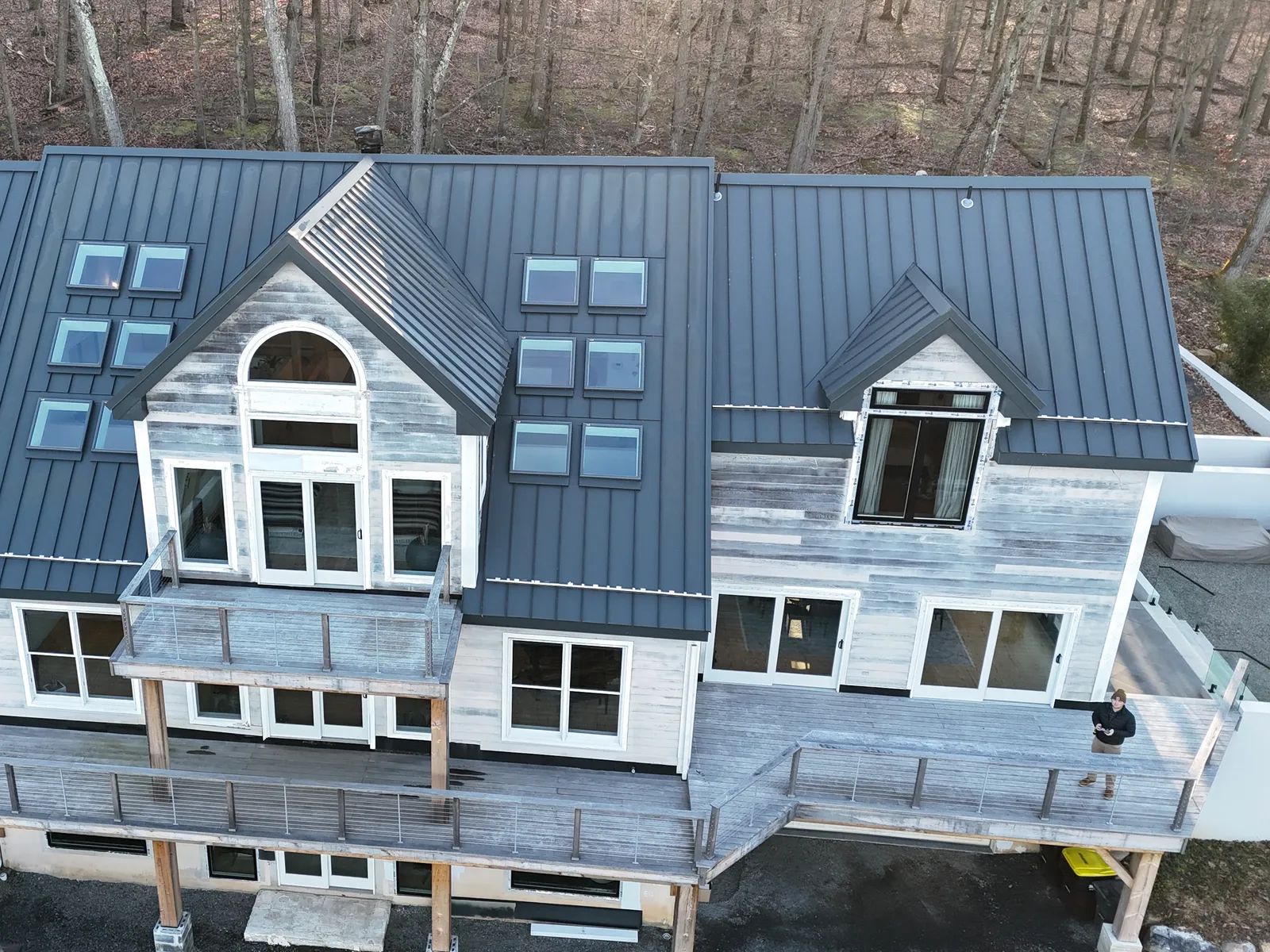

A strong thunderstorm, a windy nor’easter, or a hailstorm can leave you staring at missing shingles, a dented gutter, or a new water stain on the ceiling. The hours and days after a storm matter, both for protecting your home and for any homeowners insurance claim you decide to file.
This guide covers what to do after storm damage in Pennsylvania, how to document it, what to expect from the insurance adjuster, and where a roofing contractor fits in (and where they do not).
This article is general information only. It is not legal or insurance advice. Your policy and your insurance company decide what is covered.
Step 1: Stay safe and look from the ground
Do not climb onto a wet or damaged roof. From the ground and from inside the house, look for:
- Missing, lifted, or creased shingles
- Shingle pieces, granules, or debris in the yard and gutters
- Dented gutters, downspouts, vents, or siding
- Fallen limbs on or against the house
- Water stains, drips, or damp insulation in the attic or on ceilings
If you see active leaking, move belongings away from the water and catch the water with buckets or towels. For more on what wind and hail do to a roof, see our guide to wind and hail roof damage.
Step 2: Document everything before cleanup
The Pennsylvania Insurance Department advises homeowners to take photographs or video of the damage before cleaning up or making repairs. Good documentation is the foundation of a claim.
- Take wide and close shots. Photograph each side of the house, then zoom in on specific damage.
- Capture the inside too. Ceiling stains, wet drywall, damaged belongings, and the attic.
- Note the date and the storm. Write down when the storm hit and when you first noticed damage.
- Keep damaged items until your insurer tells you what it needs, if it is safe to do so.
Step 3: Prevent further damage with temporary repairs
Pennsylvania insurance guidance says to make the repairs needed to stop further damage, such as covering an opening in the roof, but not to make permanent repairs until your insurance company has inspected the damage or approved them. The Insurance Department notes that insurers typically reimburse the cost of these temporary repairs as part of a claim.
Keep every receipt: tarps, plywood, emergency service calls, and anything else you spend because of the damage. If the home is not livable, ask your insurer whether your policy covers additional living expenses, and save those receipts as well.
Step 4: Contact your insurance company
Report the damage to your insurer as soon as you can and follow its instructions. A few things to ask or check:
- Your deductible and any dollar limits on what the policy will pay
- Whether the type of damage you have (for example wind, hail, or water) is covered under your policy
- How the claim will be inspected and what documents they need from you
- Your claim number and the name of the person handling it
Keep a simple log of every call and email: date, name, and what was said. It makes follow-up much easier.
Step 5: Get repair estimates
The Insurance Department suggests getting more than one estimate, if possible, so you understand what repairs will cost before you meet with the insurer’s representative and before agreeing to any settlement. A detailed written estimate from a roofer lists what needs to be repaired or replaced and why, which gives you something concrete to compare against the insurer’s numbers.
Step 6: Meet the insurance adjuster
Your insurer will usually send an adjuster to inspect the damage. To make the visit productive:
- Have your photos, receipts, and estimates ready
- Walk the adjuster through every area of damage, inside and out
- Ask how they will document what they find and when you can expect their report
- Take your own notes on what was inspected
If you disagree with the insurer’s offer, Pennsylvania guidance says you can negotiate, and if a claim is denied you may appeal to your insurance company’s claim manager. You can also contact the Pennsylvania Insurance Department’s Consumer Help Center with questions or complaints.
How a roofing contractor can help, and where they cannot
A qualified roofer can be a big help after a storm. A contractor can:
- Inspect the roof safely and photograph damage you cannot see from the ground
- Install temporary protection to stop further water entry
- Provide a detailed written estimate of the repair or replacement scope
- Be on site during the adjuster’s inspection, if you want, to point out the damage they found
- Complete the approved repairs and document the finished work
What a contractor is not is your claim representative. If you want a professional to handle the claim on your behalf, Pennsylvania licenses and regulates public adjusters for that role, and you can verify a public adjuster’s license with the Insurance Department. Your deductible is your responsibility under your policy, and no contractor can promise that a claim will be approved. Be cautious of anyone who says otherwise.
Learn more about how we handle storm damage and insurance repairs and roof leak repair.
Watch out for storm chasers
After big storms, door-to-door solicitors often appear. The Pennsylvania Insurance Department urges homeowners to be wary of anyone who knocks on the door. Before hiring anyone:
- Ask for the contractor’s Pennsylvania Home Improvement Contractor (HIC) registration number and verify it with the Attorney General (1-888-520-6680 or the online search)
- Check references and confirm insurance
- Get the agreement in writing
- Do not pay in full or sign that work is complete until the work is actually finished
Our Pennsylvania HIC registration number is PA178779. The Pennsylvania Insurance Department’s Natural Disaster Insurance Guide is a helpful resource to keep on hand.
Frequently asked questions
Should I make repairs before the adjuster comes?
Pennsylvania guidance says to make temporary repairs needed to prevent further damage, after documenting it with photos or video, but to hold off on permanent repairs until your insurer inspects or approves them. Keep all receipts.
Can a roofing contractor negotiate my claim for me?
A contractor can inspect, document, and estimate the damage, but is not your claim representative. If you want someone to handle the claim on your behalf, Pennsylvania licenses public adjusters for that role.
Will my claim be approved?
Only your insurance company decides that, based on your policy and its inspection. No contractor can promise approval.
What if I disagree with the settlement offer?
Pennsylvania guidance says you can negotiate, and if a claim is denied you can appeal to your insurer’s claim manager. The Insurance Department’s Consumer Help Center can also answer questions.
If a storm has hit your home, we can inspect the roof and give you a detailed written estimate. Request a free estimate to get started.