


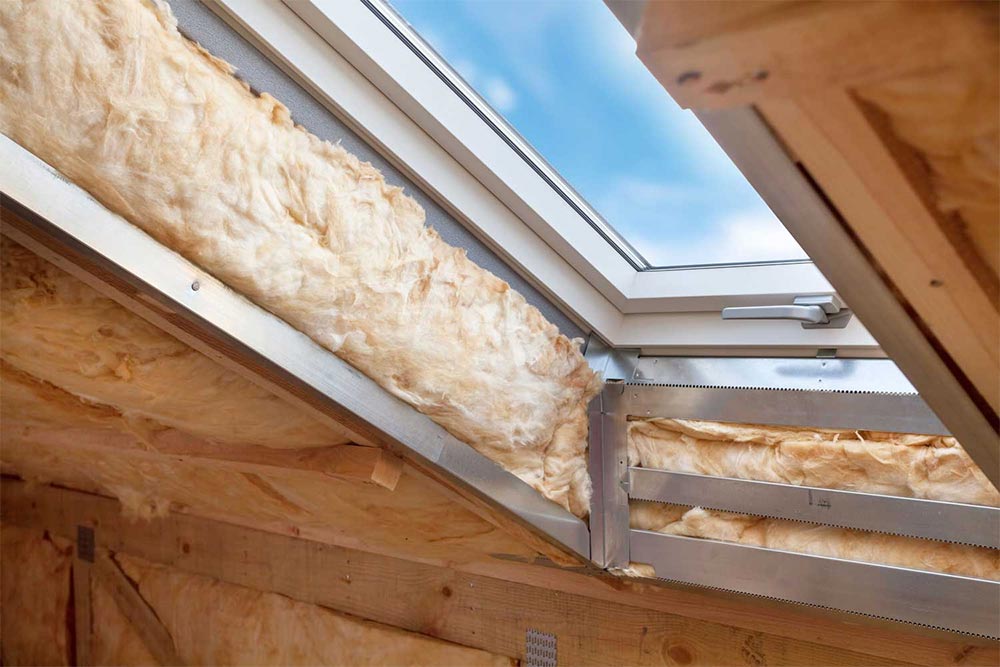

Energy bills climbing higher each month? Uncomfortable temperature swings between rooms? Your home’s comfort and efficiency depend heavily on roof insulation. Proper insulation for roof systems acts as your home’s thermal barrier, keeping conditioned air inside while blocking external temperature extremes. With heating and cooling costs representing up to 50% of typical energy expenses, quality roofing insulation delivers immediate savings and long-term value.
What Is Roof Insulation?
Roof insulation is material installed in or on your roof structure to reduce heat transfer between your living space and outside environment. It works by trapping air within its structure, creating resistance to heat flow measured in R-value—the higher the R-value, the better the performance.
Quality roof insulation material blocks heat transfer through conduction, convection, and radiation. During summer, insulation roof systems block heat from penetrating your living space. In winter, they prevent warm air from escaping—where up to 25% of heat loss typically occurs in poorly insulated homes.
Why Is Roof Insulation Important?
Roof insulation delivers multiple critical benefits. Energy efficiency improvements reduce heating and cooling demands by 15-30%, translating to hundreds of dollars in annual savings. Temperature regulation creates consistent comfort throughout your home, eliminating hot spots in summer and cold zones in winter.
Moisture control prevents condensation leading to mold growth, wood rot, and structural damage. This protection extends your roof’s lifespan and maintains healthy indoor air quality. Many homeowners see cost of roof insulation investments recoup through energy savings within 3-7 years.
Types of Roof Insulation
Roof insulation types vary significantly in performance, application method, and cost. Understanding options helps you select the best roof insulation for your needs.
1. Spray Foam Insulation
Spray foam expands upon application, filling gaps and creating air-tight seals.
Pros — Highest R-value per inch (R-6 to R-7), superior air sealing, moisture barrier properties, conforms to irregular spaces.
Cons — Higher roof insulation cost ($3-7 per square foot), requires professional installation, off-gassing during curing.
2. Structural Insulated Panels (SIPs)
SIPs consist of insulation foam core sandwiched between structural facing materials.
Pros — Excellent R-values (R-15 to R-30), superior strength, fast installation, minimal thermal bridging.
Cons — Higher upfront costs, requires careful planning, specialized installation knowledge.
3. Rigid Insulation Boards (High-Density Polyiso Cover Boards)
Polyisocyanurate rigid boards offer high R-values in thin profiles.
Pros — High R-value per inch (R-6 to R-6.5), lightweight yet durable, moisture resistant, versatile applications.
Cons — Performance decreases in cold temperatures, requires proper fastening, higher material costs.
4. Fiberglass Batt Insulation
Pre-cut fiberglass batts fit between standard framing spacing.
Pros — Most economical option ($0.50-1.50 per square foot), DIY-friendly installation, widely available, non-combustible.
Cons — Lower R-value per inch (R-3.2 to R-3.8), poor air sealing, moisture absorption reduces performance.
5. Loose-Fill / Blown-In Insulation
Loose fibers blown into attic spaces conform to irregular areas.
Pros — Excellent for retrofit applications, fills irregular spaces, good R-value (R-3.5 to R-4 per inch), affordable ($1.50-3 per square foot).
Cons — Requires specialized equipment, settles over time, moisture absorption concerns.
6. Gypsum Cover Boards
Gypsum boards provide fire resistance and dimensional stability as cover layers.
Pros — Excellent fire resistance, stable substrate for roofing membranes, moisture resistant formulations.
Cons — No insulating value itself, adds weight, limited residential applications.
7. Perlite Cover Boards
Expanded perlite boards offer lightweight, fire-resistant protection.
Pros — Excellent fire resistance, lightweight, moisture resistant, provides slope for drainage.
Cons — Lower R-value, primarily for commercial applications, higher cost for residential use.
8. Fiber Cement Cover Boards
High-density fiber cement boards provide durable, fire-resistant protection.
Pros — Superior impact resistance, excellent fire ratings, moisture and mold resistant, long-lasting durability.
Cons — Heavy weight, expensive for residential applications, requires professional installation, no insulating value.
How to Choose Roof Insulation for Your Home
Selecting the best insulation for roof applications requires evaluating several factors. Climate determines R-value requirements—colder regions need R-49 to R-60 for attics, while moderate climates function well with R-30 to R-38. Check local building codes for minimum requirements.
Roof type influences options. Attic spaces suit fiberglass batts or blown-in materials. Cathedral ceilings benefit from spray foam or rigid boards. Flat roofs typically use rigid board systems.
Budget considerations balance upfront cost to insulate roof against long-term energy savings. While spray foam costs more initially, superior performance may justify investment in harsh climates. Fiberglass provides economical baseline performance. Retrofit projects may favor blown-in insulation, while new construction allows optimal material selection.
Your home’s comfort and energy efficiency start with a properly installed roof. At Infinity Home Remodeling, we help homeowners throughout Berks, Lehigh, Bucks, and Montgomery Counties choose the right roofing systems that support long-term insulation performance and overall home efficiency. Ready to upgrade your home with a high-quality roof? Contact us today for a professional roofing evaluation.