


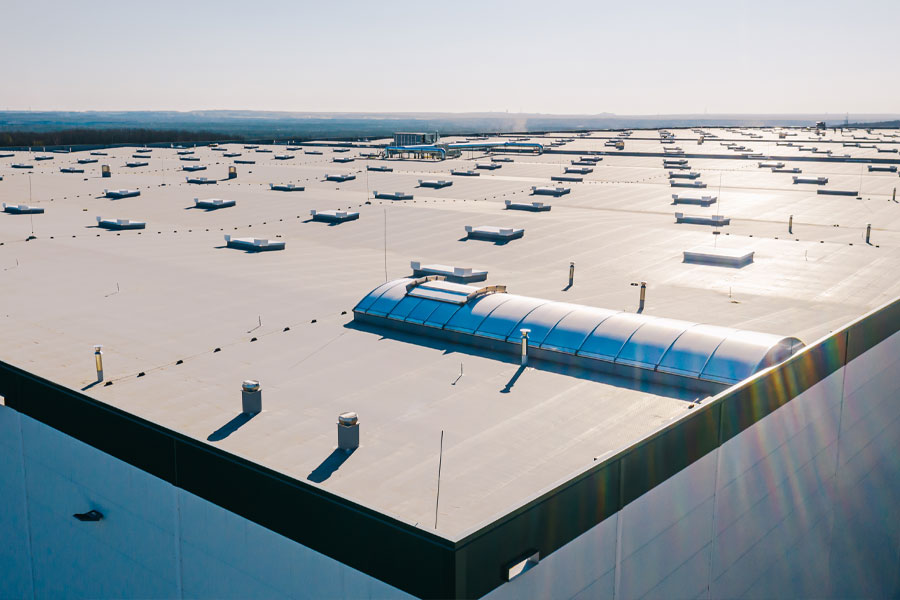

When it comes to protecting large-scale facilities, warehouses, and manufacturing plants, industrial roofing stands as one of the most critical investments a business can make. Unlike residential structures, industrial roofs must withstand extreme conditions, support heavy equipment, and provide decades of reliable protection. Understanding your options is essential for making an informed decision that will serve your business for years to come.
What Is an Industrial Roof?
An industrial roof — is a specialized roofing system designed for large-scale manufacturing facilities, warehouses, distribution centers, and production plants — typically spanning tens of thousands to hundreds of thousands of square feet.
The primary functions include protection from weather elements, thermal insulation, energy efficiency, structural support for HVAC equipment, and long-term durability with minimal maintenance requirements.
Industrial roofs differ significantly from residential and commercial roof types. While residential roofs cover smaller areas with simpler designs, industrial building roof systems must handle extreme operational demands. They support heavy machinery, accommodate constant temperature fluctuations from production processes, and withstand the vibrations and stresses of manufacturing operations.
What Is the Roofing Industry?
The roofing industry encompasses all aspects of roof system development, installation, and maintenance — from material manufacturing to professional installation services, regular inspections, repair work, and ongoing maintenance programs.
The industry serves three main segments: residential (single-family homes and small apartment buildings), commercial (office buildings, retail centers, and hospitality structures), and industrial (manufacturing plants, warehouses, and distribution facilities).
Industrial roofing represents the most specialized segment. Factory roofing projects require advanced engineering knowledge, specialized equipment for large-scale installations, and expertise in handling complex commercial roof construction. A factory roof failure can halt production lines, damage expensive equipment, and result in significant financial losses, making quality installation paramount.
Common Types of Industrial Roofing
Understanding industrial roof types helps facility managers make informed decisions. Here are the main roofing types available:
- Metal
- Metal Retrofit Systems
- Asphalt Shingle (for small industrial structures)
- Modified Bitumen (Mod-Bit)
- BUR (Built-Up Roof)
- TPO
- EPDM
- PVC
- Spray Polyurethane Foam
- Roof Coating Systems
- Concrete
- Green Roofs
Each system offers different benefits for roofing for industrial buildings. Metal provides exceptional longevity, single-ply membranes like TPO and EPDM offer cost-effective protection, while spray foam delivers superior insulation.
Best 3 Industrial Roofing Solutions
Among different types of commercial roofing, three systems consistently deliver outstanding performance:
- TPO (Thermoplastic Polyolefin)
TPO ranks among the best commercial roofing material options for modern facilities. This white, reflective membrane reduces cooling costs by reflecting up to 87% of solar radiation. The heat-welded seams create permanent, watertight bonds that resist leaks and weather damage. TPO offers excellent chemical resistance, making it ideal for roofing for manufacturing facilities. With a lifespan of 20-30 years and competitive pricing, TPO delivers exceptional value.
- EPDM (Ethylene Propylene Diene Monomer)
EPDM rubber roofing has protected industrial roofs for over 60 years. This proven system excels in extreme temperature environments, remaining flexible in cold climates and stable in intense heat. EPDM resists UV radiation, ozone, and oxidation naturally without additional coatings. For facilities prioritizing reliability and budget efficiency, EPDM remains one of the most dependable types of commercial roofing materials.
- Metal Roofing
Metal represents the premium choice among industrial roofing systems, with standing seam systems lasting 40-50 years or more. The interlocking panels create superior wind resistance and weather protection. Metal roofs require minimal maintenance, resist fire, and support solar panel installations effectively. While initial costs exceed other commercial roofing material types, the longevity and minimal upkeep make metal an excellent long-term investment.
Choosing the Right Industrial Roofing for Your Building
Selecting appropriate types of commercial roof systems requires evaluating several critical factors.
Climate considerations determine which roofing types perform best. Northern facilities need systems that handle snow loads, while southern buildings benefit from reflective types of commercial flat roofs that reduce cooling costs. Coastal environments require corrosion-resistant materials for industrial flat roofing applications.
Budget planning must balance initial installation costs against lifecycle expenses. Premium industrial roofing materials often cost more upfront but deliver better value over 30-40 years through reduced maintenance and longer lifespans.
Building infrastructure assessment is crucial. Heavy industrial roof types like concrete require robust support structures. Buildings with extensive rooftop HVAC systems need different types of commercial roofing systems that accommodate equipment loads while maintaining weatherproof integrity.
Energy efficiency goals increasingly influence material selection. Reflective coatings and insulated types of roof systems lower heating and cooling expenses significantly. Consider cool roof technologies when selecting commercial building roof material.
Long-term operational planning spanning 20-40 years ensures your investment aligns with business objectives. Consider potential facility expansions, solar panel additions, and maintenance capabilities when choosing types of industrial roofs. Plan regular inspections and maintenance schedules to maximize your roof’s lifespan.
Infinity Home Remodeling specializes in commercial industrial roofing throughout Berks County, Lehigh County, Bucks County, and Montgomery County. Our experienced team understands the unique challenges of factory roofing and delivers engineered solutions for lasting protection. We help you evaluate types of commercial roofing systems, assess your facility’s specific needs, and implement the right solution for your budget and timeline. Contact us today to discuss your roofing for industrial buildings project and discover how professional installation protects your business investment for decades to come.