


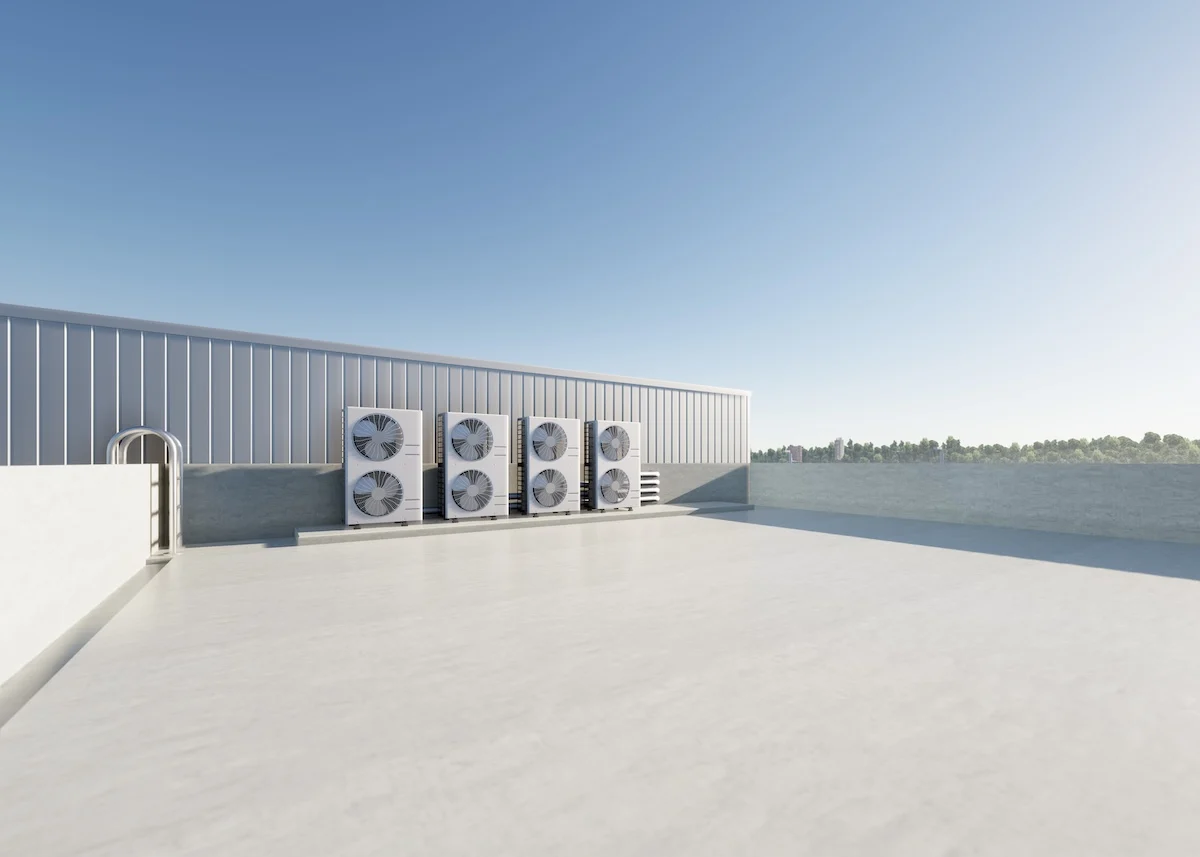

Commercial flat roofing protects warehouses, retail centers, office buildings, and manufacturing facilities across the United States. Understanding your roofing options ensures you make informed decisions that protect your investment and support business operations for decades.
What Is Commercial Flat Roofing?
Commercial flat roofing is a low-slope roofing system designed specifically for business and industrial buildings.
Unlike pitched residential roofs, commercial flat roofs have minimal slope—typically just enough for water drainage. This design maximizes usable interior space, simplifies HVAC equipment installation, and reduces construction costs. Flat roof commercial buildings include warehouses, shopping centers, office complexes, and manufacturing facilities. The flat design allows rooftop equipment placement and potential future expansion.
How Flat Roofing Systems Work
Commercial roofing systems consist of multiple layers working together.
Structural Decking
The foundation is the structural deck—typically concrete, metal, or wood—that supports all other layers and transfers weight to the building’s framework.
Insulation Layer
Insulation improves energy efficiency and reduces operational costs. Commercial flat roof construction often uses rigid foam boards or spray foam insulation that meets building codes.
Membrane or Roof Covering
The waterproof membrane is the critical protective layer. Types of commercial flat roofs use different membrane materials, each offering unique benefits.
Flashing and Edge Details
Flashing seals transitions around rooftop equipment, walls, and edges, preventing water infiltration at vulnerable termination points.
Top Commercial Flat Roofing Materials
TPO (Thermoplastic Polyolefin)
TPO is the most popular commercial roofing material with its white reflective surface reducing cooling costs by 10-25%. Heat-welded seams create watertight bonds. It lasts 15-30 years with excellent value.
PVC (Polyvinyl Chloride)
PVC provides premium durability with superior chemical resistance—ideal for restaurants or manufacturing facilities. It resists punctures better and lasts 20-30 years.
EPDM (Ethylene Propylene Diene Monomer)
EPDM rubber is the most economical option with its black surface. It lasts 25-30 years, resists UV radiation, and represents proven reliability for budget-conscious businesses.
Modified Bitumen
Modified bitumen combines asphalt with modern polymers. Multiple layers create redundant waterproofing, lasting 20-30 years with excellent puncture resistance.
Built-Up Roofing (BUR)
BUR features multiple layers of bitumen and reinforcing fabrics. This traditional commercial built up roof system lasts 20-40 years with excellent protection.
Advantages of Commercial Flat Roofing
Types of commercial roofing systems like flat roofs offer significant business advantages. Lower installation costs save money on new construction. The flat design simplifies maintenance access and equipment installation. Modern commercial roofing materials provide excellent energy efficiency, reducing operational costs. Quick installation minimizes business disruption, and durable materials require minimal maintenance over decades.
Essential Maintenance Tips for Flat Roofing Systems
Schedule Biannual Inspections
Professional inspections twice yearly identify potential issues before they become costly problems, ensuring your commercial roof remains watertight.
Keep the Roof Clean
Remove debris, leaves, and standing water regularly. Clogged drains cause ponding water that accelerates membrane deterioration.
Repair Issues Promptly
Address small punctures, seam separations, or flashing problems immediately. Minor repairs cost hundreds, while delayed repairs require thousands.
Monitor Interior Signs of Damage
Water stains, musty odors, or ceiling discoloration indicate active leaks requiring immediate professional attention.
Flat Roof Repair or Replacement?
When to Repair:
Repair when damage is localized (less than 30% of roof area), your commercial roof is less than two-thirds through its lifespan, leaks are isolated with identifiable sources, and the membrane shows minor wear in small areas.
When to Replace:
Replace when your roof has reached its expected lifespan, widespread damage affects more than 30% of the area, recurring leaks persist despite repairs, or significant structural issues exist requiring commercial building roof replacement.
What to Expect During Installation
Commercial roofing construction typically takes 1-4 weeks depending on building size. Professional contractors conduct inspections, prepare proposals, coordinate with building operations to minimize disruption, install proper insulation and drainage, apply membrane with manufacturer-certified techniques, and complete quality checks. Weather conditions affect timelines—ideal installation occurs during dry, moderate temperatures.
Choosing the Right Commercial Roof for Your Building
Selecting the best commercial roofing systems depends on several factors. Budget constraints often favor EPDM or TPO for cost-effectiveness. Climate considerations—hot regions benefit from white TPO’s reflectivity. Building use matters—restaurants need PVC’s chemical resistance, while standard warehouses work with EPDM. Consider energy goals and maintenance capacity when evaluating types of commercial roofs for your facility.
Protecting your commercial investment requires expert guidance and professional installation. Our team at Infinity Home Remodeling serves businesses throughout Berks County, Lehigh County, Bucks County, and Montgomery County with comprehensive commercial roofing systems. We specialize in all types of commercial flat roofs and provide honest assessments, quality materials, and certified installation. Whether you need a new commercial roof, repairs, or maintenance services, we deliver reliable solutions. Contact us today for a free commercial roofing consultation!