


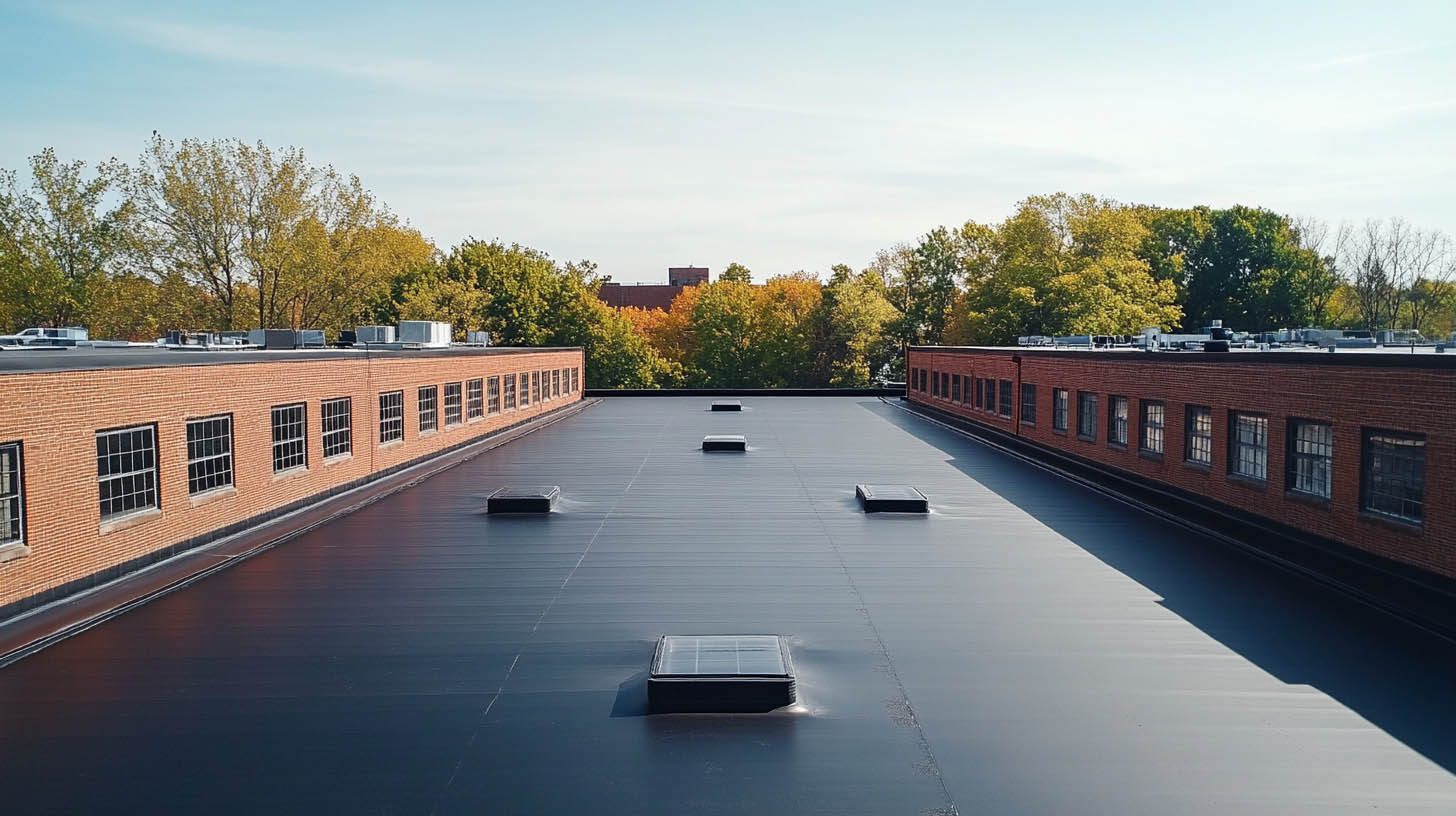

Rubber roofing is a durable, flexible roofing system made from synthetic rubber materials designed primarily for flat and low-slope applications.
This commercial rubber roofing solution has become the industry standard for warehouses, office buildings, and retail centers. Rubber roof systems offer exceptional waterproofing and longevity—often lasting 20-40 years with minimal maintenance. Their flexibility withstands temperature fluctuations without cracking, while seamless installation creates watertight barriers. This combination makes rubber roofing the preferred choice for commercial flat roof applications.
Understanding EPDM Rubber Roofing
EPDM rubber roofing (Ethylene Propylene Diene Monomer) is the most common type of rubber roof material, recognizable by its black or white surface. This single-ply membrane consists of synthetic rubber derived from oil and natural gas. EPDM comes in large sheets—typically 10 to 50 feet wide—minimizing seams and leak points. Installation involves mechanically fastening, fully adhering, or ballasting the membrane. EPDM lasts 25-30 years and represents one of the most cost-effective commercial roofing solutions.
Why Rubber Roofing Excels on Flat and Commercial Roofs
Rubber roofing systems excel on flat roofs because their membrane design creates continuous waterproofing. The flexible nature allows expansion and contraction with temperature changes. Unlike traditional materials, rubber membranes install as large sheets with minimal seams, reducing leak potential. Heat-welded seams create watertight connections stronger than the membrane itself, making rubber roofing ideal for large, flat commercial expanses.
Weather Resistance and Durability
Commercial rubber roofing demonstrates exceptional weather resistance across diverse climates. EPDM and other rubber materials resist UV radiation and perform reliably from -40°F to 300°F. Quality rubber roofing lasts 20-40 years depending on material type. While reasonably puncture-resistant, sharp objects or heavy foot traffic can cause damage. Advantages include excellent waterproofing, flexibility, and longevity.
Low Maintenance and Easy Repairs
Rubber roofing requires minimal maintenance—biannual inspections, debris removal, and drainage checks. Small punctures patch quickly with rubber patches and adhesive. Seam issues are easily addressed with seam tape or sealant. This ease of repair reduces long-term costs significantly for commercial property owners.
Types of Rubber Roofing Materials
EPDM (Ethylene Propylene Diene Monomer)
The most popular rubber roof material, EPDM offers proven durability at economical cost. Available in black or white, it installs quickly and lasts 25-30 years. EPDM resists UV radiation and remains flexible in extreme temperatures, representing the best value for most commercial applications.
TPO Roofing
TPO (Thermoplastic Polyolefin) is a white, reflective membrane offering excellent energy efficiency. Its bright surface reflects sunlight, reducing cooling costs by 10-25%. TPO’s heat-welded seams create strong bonds and it lasts 15-30 years, excelling in hot climates.
PVC Roofing
PVC represents the premium membrane option with superior chemical resistance—crucial for restaurants or manufacturing facilities. It resists punctures better than EPDM and lasts 20-30 years. PVC costs 20-40% more but offers enhanced durability where needed.
Modified Bitumen (Mod-Bit)
Modified bitumen combines asphalt with modern polymers. This flexible roofing material installs via torch-down, hot asphalt, or cold adhesive. Multiple layers create redundant waterproofing. Mod-bit lasts 20-30 years with excellent puncture resistance.
Liquid-Applied Rubber Roofing
Liquid-applied coatings spray or roll onto existing roofs, creating seamless waterproofing. These systems excel for roof restoration or irregular surfaces. Liquid rubber eliminates seams and can extend aging roofs’ lifespans by 10-15 years.
How to Choose the Right Rubber Roofing for Your Property
Rubber roofing systems primarily serve commercial buildings with flat or low-slope designs. Warehouses, office buildings, and retail centers benefit most from rubber roofing’s cost-effectiveness on large areas.
Residential applications exist for flat-roof garages, home additions, or modern homes with flat sections. Consider rubber roofing when traditional shingles won’t work effectively on flat areas.
When selecting, consider climate—hot regions benefit from TPO’s reflectivity, cold climates suit EPDM’s flexibility. Budget matters—EPDM offers economy, PVC provides premium performance. Building use affects choice—restaurants need PVC’s chemical resistance, warehouses work well with EPDM.
Professional installation ensures optimal performance for both commercial and residential properties. Our team at Infinity Home Remodeling serves clients throughout Berks County, Lehigh County, Bucks County, and Montgomery County. We specialize in EPDM roof installation, TPO systems, and all commercial rubber roofing material options. Contact us today for a free consultation!